You, Me and Everyone Else: Fear of Failure in a Crowded Room
Leave a commentOctober 27, 2012 by Susie Ting
“Don’t be in such a hurry to condemn a person because he doesn’t do what you do, or think as you think or as fast. There was a time when you didn’t know what you know today.”
― Malcolm X
Fear is a curious thing. It is an evolutionary response to things that are threatening or unfamiliar, (those which could cause us harm). Our response to fear is emotional and triggers all sorts of uncomfortable physical reactions (sweaty palms, rapid heartbeat, short breaths, nausea etc), which tell us to fight or to flee whatever causes the fear. Mostly fleeing makes sense. Keep safe. Live for another day.
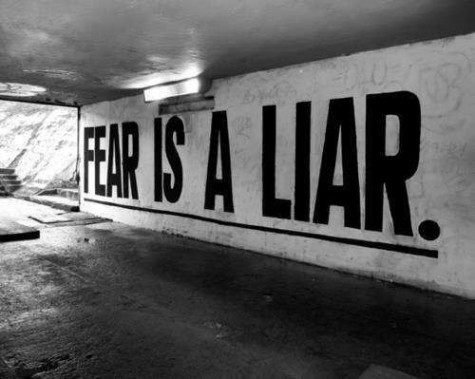
So what do we fear?
We fear failure. Mostly failure as judged by others. Judgement by others can occur unexpectedly, frequently and most often when we are unprepared. And we are right to fear. We have little or no control. We may not know what the challenge will be, or how long it will last. We don’t always know how to prepare, or what the outcome will be. It may be in a public arena and be isolating or shared.
If this fear of failing through judgement is so powerful, when and why do we allow this?
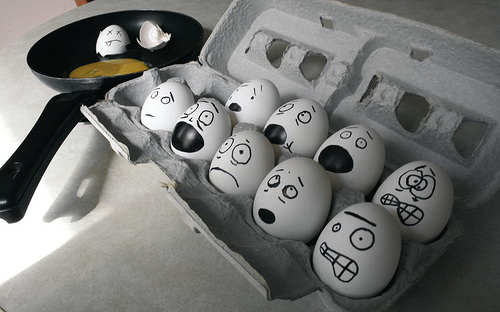
Our social and educational system ‘sorts’ or ranks people according to certain criteria. We select the ‘best’ and reject those who do not meet certain standards. It is a never-ending competition in ever-changing arenas, with shifting expectations and ambiguous rules. Maybe we are judged on knowledge, maybe skills, behaviours or other mysterious abilities. Some can be specific and measurable, but many are vague or subjective and ‘in the eyes of the beholder’. Most unsettling.
I asked a few people how and when they have experienced this kind of fear and they identified some specific fear triggers including:
- Being unfairly judged
- Being regarded as easily replaceable
- Being noticed (ie the nail that sticks out gets hammered)
- Being NOT noticed (and undervalued)
- Being seen as different (not fitting ‘the mould’)
- That we are ‘imposters’ about to be revealed (Imposter Phenomenon)
- Uncertainty or ambiguity in workplace or relationships
- Feeling unable to control events
- Feeling powerless
- Being set up to fail or suspecting traps
So why do we sometimes choose to do things we fear?
Why do we go out of our way to deliberately do things that will cause us to experience ‘delicious’ fear (scary movies, amusement park rides, bungy jumping and other such risks)? Maybe so we can feel the heightened senses that go with fear and know that we can survive and gain control of the experience. Most of these activities are short-lived and the fear is anticipated, exhilarating and boosting our self-confidence by knowing that we survived it, like when you go on a roller coaster because it terrifies you. Roller coasters, bungy jumping, even eating extra spicy Indian food maybe not really scary to you, but there is something that is and you often go out of your way to experience it.
But let’s go back to the fear of failure we get when judged by others? Why does that fear have such power over our thinking and behaviour? Why does it motivate some to greatness and paralyse others? Recently a notable business leader, John Borghetti CEO of Virgina Australia, said that he was motivated by his fear of failure and that it drove him to succeed. That works for him and for many others, but what about all those whose fears stop them in their tracks? What are the effects and what can we do to reduce the fear?
When we are fearful and not sure what to do, we tend to:
- ‘play safe’
- to only ask questions to which we know the answers
- avoid ambiguity and seek certainty
- avoid risk
- keep a low profile or seek to protect ourselves
- become passive and take the path of least resistance
- become reproductive/reactive thinkers, simply reproducing what has already been done
- become untrusting or others and of ourselves
- lose confidence
So what can we do?
- Take your ego out of equation. You are not the first or the last to feel this way
- Admit to the fear and decide not to be controlled by it
- Identify fair critiques and acknowledge them
- Commit to improve what you can
- Be process driven, not result driven
- Remember that there are multiple roads to the mountain top
- Imagine a journey to a chosen destination…at times travelling on different ground, at different speeds, with occasional uncertainty of direction, the need to correct the course, and the unexpected discoveries along the way
- The word ‘failure’ is inadequate and covers a spectrum from minor blips to cataclysmic disaster. Identify how serious each situation really is
- Seek supporters who will support you and hold you to your commitment to self improvement
- Find heroes—those who have overcome the judgement of others
- Support others
- Seek inspiration and techniques that work for you
- Amy Cuddy’s-TedX Your Body Language Shapes Who You Are
If you think that judgement by others is alarming, self-judgement can be even worse. Next week we expose how much your inner critic is charting your life and find ways to keep it in check.
 Paper Bag Thinking